* All client names have been changed to protect privacy.
It was an afternoon in September, the lingering summer heat still clinging to the skin.
In the parking lot of the family restaurant where we were to meet, my client, Mr. Nakamura (a pseudonym, male in his 40s), sat with his car engine off, gripping the steering wheel. As I settled into the passenger seat, he spoke without looking at me.
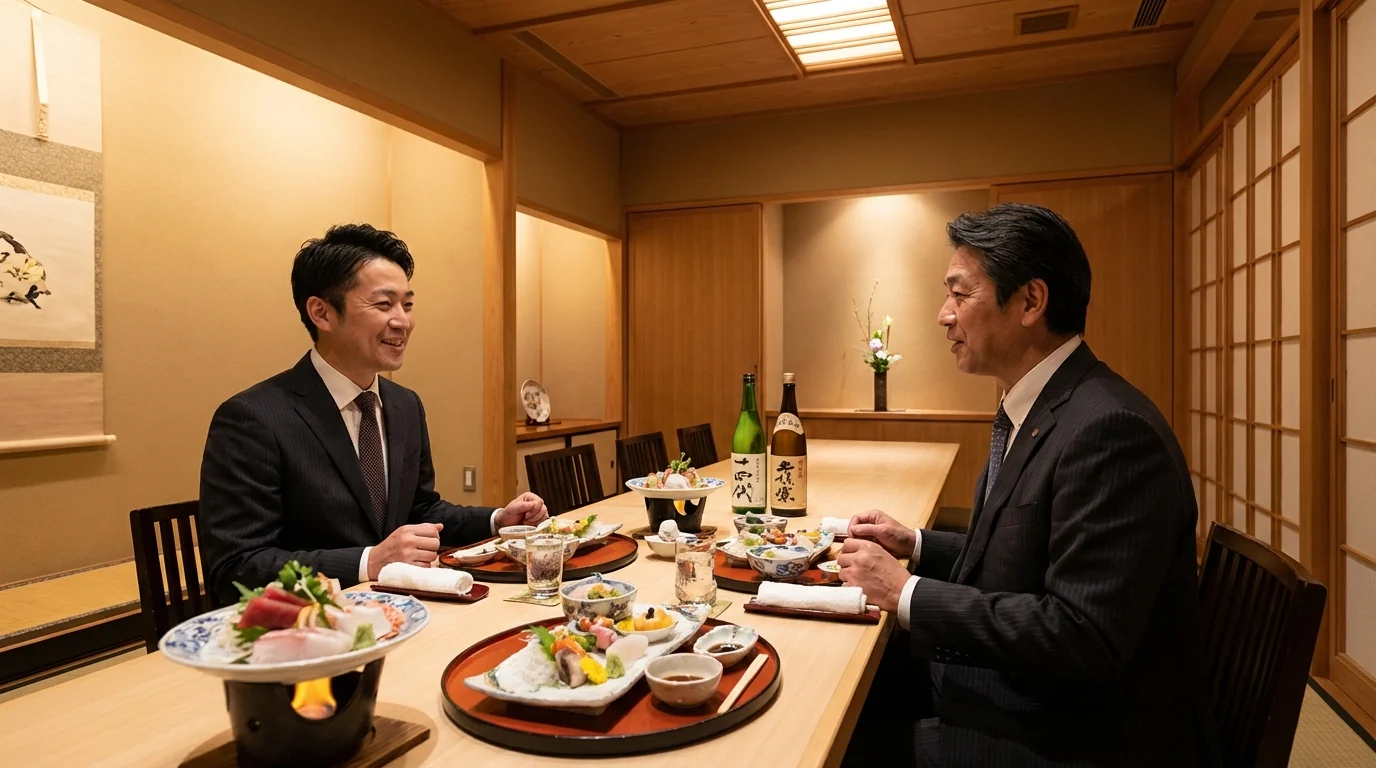
"Mr. Ishii, I... I just can't apologize by myself."
Mr. Nakamura had deeply wounded someone due to a workplace dispute. He had lashed out with emotional words, driving the other person to take a leave of absence. He knew it was his fault; he understood that. But each time he stood before the other person's house, his feet simply wouldn't move. He had written letters countless times, yet could never bring himself to post them. That's when he called Family Romance.
My job isn't to apologize on Mr. Nakamura's behalf. It's simply to be there, by his side, as he offers his own apology in his own words. It's a service I call "Apology Companion."
The night I practiced bowing my head
Before heading to the scene of an apology, I always hold a preliminary meeting with the client. We discuss what happened, what they wish to apologize for, what kind of person the other party is. And then—what precisely within themselves is holding them back.
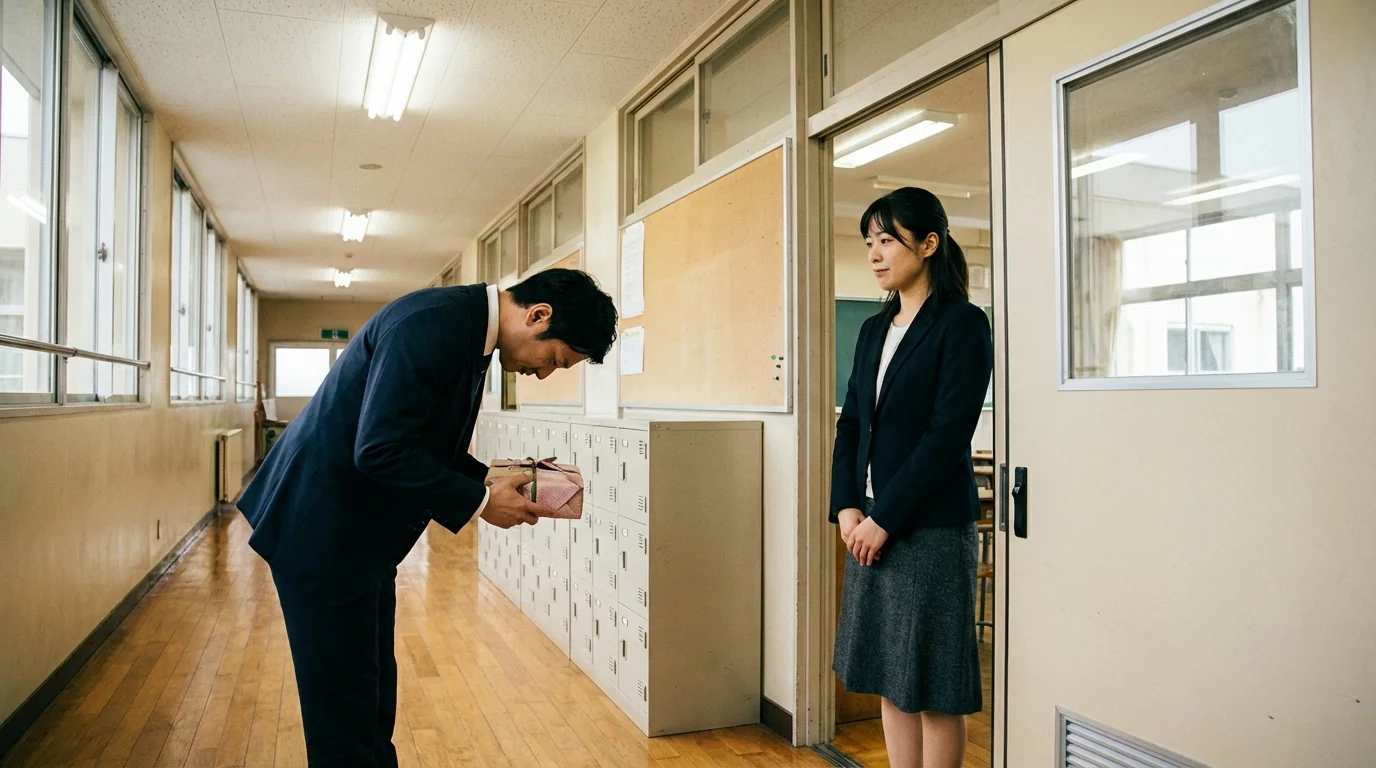
I met with Mr. Nakamura three times. During the first two, I did little more than listen to his story. On the evening of our third meeting, I said to him, "Please, try bowing your head to me, just once."
He rose from his chair and stood before me. Then, unable to utter a single word, he froze for about thirty seconds. His lips trembled. When he finally managed to say, "I'm so sorry," his voice was so hoarse it was almost inaudible.
I simply said, "I heard you."
An apology, I believe, isn't a technique. At least, that's what I've come to think. Even the most perfectly crafted words won't reach the other person if the heart isn't truly behind them. Conversely, a trembling, hoarse voice can sometimes convey a genuine emotion that people will accept. I suspect what Mr. Nakamura truly needed wasn't a script for his apology, but simply someone to endure those thirty seconds of silence alongside him.
Requests for apology companionship have been increasing year by year. They stem from neighborhood disputes, strained workplace relations, family quarrels, or face-to-face apologies after social media firestorms. The reasons are varied, yet what they all share is the simple confession: "I just can't bring myself to go there alone."
Who am I, standing there?
The challenging aspect of apology companionship lies in my "role."
In one particular request, I accompanied the client as their superior. Regarding the trouble they had caused, I would bow my head first, saying, "I apologize for my insufficient supervision," to set the tone before the client offered their own apology. In another instance, I simply sat beside them as a friend. I said nothing, merely existing there. If the other party asked, "Who are you?" I would reply, "I'm a friend." That's all.
But consider this: I am neither a real superior nor a true friend. Yet, everyone present believes me to be "the real thing." Is this a lie?
I have grappled with this question for a long time. Over twenty years of human rental work, and I still don't have a definitive answer. Yet, there is one thing I am absolutely certain of: Mr. Nakamura's "I'm so sorry," directed at the other person, was genuine. If my presence there allowed that word to be delivered, then even if my own existence was a fabrication, the outcome it created was undeniably real.
If the emotion is real, then it *is* real. I have chosen to believe in this.
The silence of the one being apologized to
The most tense moment during an apology is always the silence, when the other party says nothing at all.
I once accompanied a client for an apology concerning a neighborhood dispute. My client, Ms. Tanaka (a pseudonym, female in her 50s), had been embroiled in a long-standing conflict with her next-door neighbors over noise. After several arguments, she had blurted out to the neighbor's wife, "Why don't you just move!" For two years since that incident, despite living next door to each other, they hadn't once made eye contact.
When Ms. Tanaka and I pressed the neighbor's intercom, the woman who answered, upon seeing Ms. Tanaka's face, widened her eyes for just a fleeting moment. Then, her expression instantly reverted to blankness.
Ms. Tanaka said, "I am truly sorry for that time." The other party said nothing. Ten seconds. Twenty seconds. Thirty seconds. Beside her, I felt as though the sheer weight of that silence was pressing down on me, threatening to crush me.
Eventually, the other woman gave a small nod. "…I understand," was all she said. I don't believe she had forgiven her. But she had, at least, acknowledged and received the apology.
On the way home, Ms. Tanaka was in tears. "She might not have forgiven me," she whispered, "but I'm glad I finally said it."
That day, I learned that an apology is not merely an act to gain forgiveness. It is also an act of self-liberation. It is for the other person, yet equally for oneself. I believe it is only when both elements are present that the words "I'm sorry" truly become complete.
Why can people no longer apologize by themselves?
I sense that the growing number of requests for apology companionship reflects a deeper societal shift.
In times past, there were always people who would step in to mediate—the neighborhood association head, a senior colleague, a family uncle. Someone would gently intervene with a "now, now," smoothing things over and arranging for apologies to be made. Today, such intermediary presences are fading. As human relationships have been streamlined and superfluous connections pared away, when trouble inevitably arises, there is no one left to lean on.
The proliferation of social media plays a part. The very experience of apologizing face-to-face has diminished. While one can easily type "I'm sorry" in a text, looking someone in the eye and speaking those words aloud demands a different kind of resolve. For a generation accustomed to communicating through screens, the act of bowing one's head before another living person is a hurdle far higher than they can imagine.
I've also seen an increase in requests from young people in their twenties: troubles at part-time jobs, apologies to a romantic partner's family, cases where online remarks were identified, necessitating a direct apology. It's not that they don't *want* to apologize; they simply don't know *how*.
In truth, it would be better if such a service didn't exist at all. A society where people can apologize in their own words, whether alone or with someone close, is undoubtedly preferable. Yet, at this very moment, there are those whose feet are frozen in place. Standing beside them is what I can do.
What remains after "I'm sorry"
After accompanying someone to an apology, I always feel a touch of emptiness.
At the scene, all my senses are honed. The client's expression, the other party's tone of voice, the subtle shifts in the room's atmosphere—I absorb it all, interjecting the right words at the crucial moment. Yet, once it's over, I vanish from the scene. Most of the time, I never know what becomes of the relationship between the client and the other party.
A month later, I received a call from Ms. Nakamura. "The other party has apparently returned to work," she said. "It's still a bit awkward, but when we passed in the corridor, they gave me a slight bow."
When I heard that report, I was honestly happy. But at the same time, a thought occurred to me: perhaps, even without me that day, Ms. Nakamura might have found a way to apologize on her own someday. All I did was hasten that 'someday' just a little.
I don't want people to become dependent on me. I want them to use me to forge genuine human connections. This is what I always believe. It's especially true for apology accompaniment. I wish it would always be a one-time thing. For me, success means there are no second requests.
Carried by the September breeze
This September, too, I have several apology accompaniments scheduled.
I wonder if the weariness of summer impacts relationships. Requests tend to increase during this season. Perhaps the frustrations that simmered in air-conditioned rooms begin to surface as the weather starts to cool.
On my way to the scene, I always tell myself one thing: "This person's 'I'm sorry' belongs solely to this person." No matter how meticulously I prepare the stage, it is *they* who bow their head. It is *they* who tremble with emotion, and *they* who endure the silence. I am, after all, merely a shadow.
Yet, there are days when one cannot walk without a shadow. Days when the light is too intense, and one loses sight of their own feet. On such days, to simply be by their side—that is my work.
I still remember Ms. Nakamura's trembling hand in the parking lot. That hand released the steering wheel, she stepped out of the car, and knocked on the other person's door. In that moment, Ms. Nakamura was truly walking on her own two feet.
The words "I'm sorry" are not an admission of weakness. They are the very first step one takes toward another.
I will continue to be by the side of that first step.
「頭を下げることは弱さではない。相手の痛みを受け止める強さだ」
— 石井裕一