* All client names have been changed to protect privacy.
In front of the flower shop, I stopped.
It was the second Sunday of May. The storefront overflowed with red and pink carnations, and a small child pulled their father's hand, pointing and exclaiming, "This one for Mommy!" It was a heartwarming scene. But the carnation I was about to deliver was not part of such a story.
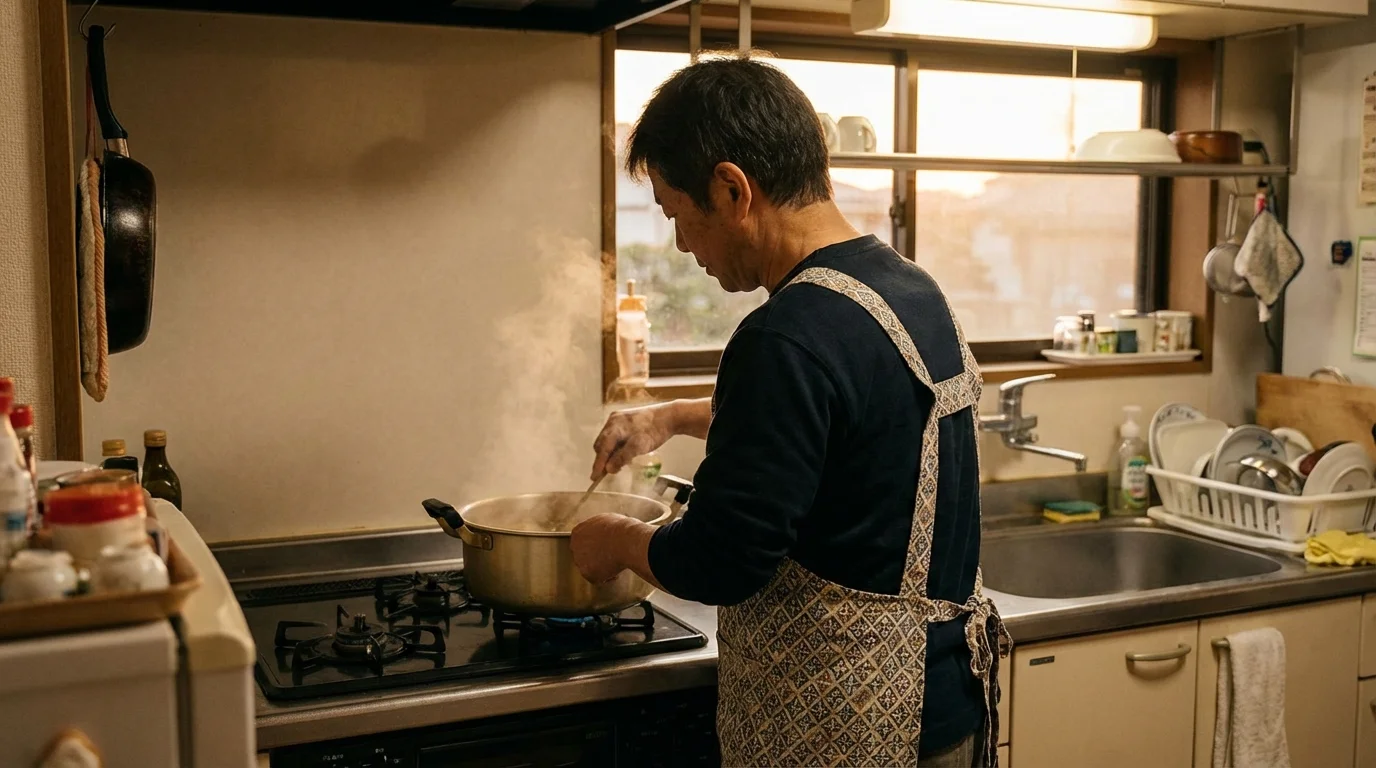
Let's call the client "Keiko-san" for now. She's in her late forties and has a daughter in fifth grade. Her husband left home three years ago. They aren't divorced; he's just... gone. Keiko-san's request was for me to attend her daughter's school events as a "father." It's a common request. Parent-teacher conferences, sports days, three-way meetings—I've done them dozens of times.
But this request was a little different.
"My daughter said she wants to give a present for Mother's Day," she explained. "But she says she can't go buy it without a father."
Keiko-san's voice over the phone trembled in a way that could be interpreted as either laughing or crying.
It's not that a fifth-grade girl can't go buy a present for her mother by herself. She could even go out with friends. But that child—let's call her "Misaki-chan"—reportedly said, "I want to choose it with Dad." She'd apparently heard stories in class about friends' dads going with their children to buy presents for their mothers.
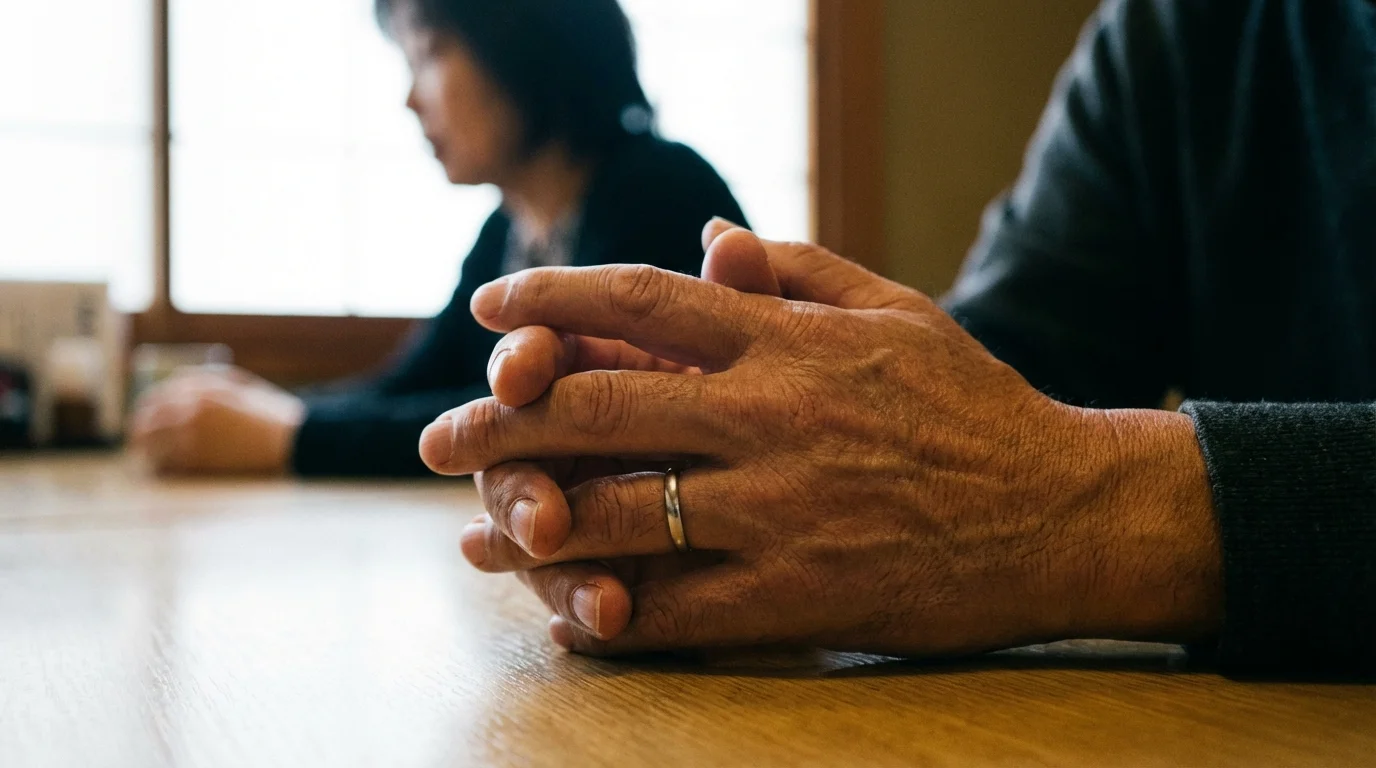
Misaki-chan felt that choosing a mother's present together with a father—the act itself—held meaning.
On Sunday morning, I headed to the meeting place. I'd met Misaki-chan once before at a sports day. When she said, "Dad, long time no see," I replied, "Long time no see." No matter how many times I do it, that first exchange is always the heaviest.
"I want to choose it with Dad."
As we walked through the shopping mall, Misaki-chan chatted on and on: about school, her friends, the kind of dog she wanted to get. I nodded along, occasionally interjecting with questions. It was a comfortable distance, not unnatural for a father—not too close, not too far. This is something that can only be mastered through experience.
"Dad," Misaki-chan suddenly asked, "what do you think Mom likes?"
Misaki-chan suddenly asked that.
I knew almost nothing about Keiko-san. There was information shared beforehand: her favorite color is lavender, she often drinks black tea, she likes reading. But that was "information," distinct from "knowing." A real husband, through years of living together, would know even unexpressed preferences. Her mood when she wakes up, the shoes she picks on a rainy day, her habit when she hesitates in front of the refrigerator. I believe the accumulation of such things is what it means to "know" someone.
But I don't have that.
"Hmm, what do you think Mom likes, Misaki?"
It wasn't that I was evading the question. I thought this was the right answer. The one who truly knows her mother best is this child, who is with her every day.
"You know," Misaki-chan said, "Mom recently mentioned she ran out of hand cream. She said her hands get rough."
I was a little surprised by Misaki-chan's perceptiveness. Children are watching. Far more than their parents imagine, they are always watching.
We stopped by a drugstore and chose a lavender-scented hand cream. Then we bought a message card at a general store. Misaki-chan deliberated for quite a long time in front of the shelf: flower pattern or cat pattern? I waited without rushing her. Not rushing her, as a "father," was probably the most important task.
Finally, we stopped by the flower shop. One carnation. Misaki-chan chose pink.
"Dad, why don't you buy one too? For Mom."
When she said that, I was momentarily speechless.
A rental husband giving a carnation to a client, who is a wife. Was that within the scope of the acting? Part of the service? Or was it something else entirely?
I bought a red carnation. Misaki-chan looked happy. That smile was genuine. At least, it seemed that way to me.
Rental Husband and Mother's Day
Having served as "husband" to over six hundred women, I've found that Mother's Day requests aren't actually that frequent. Compared to Christmas or birthdays, Mother's Day is typically when the "wife" is celebrated, so it's often assumed there's no role for the husband.
But no, that's not it.
What's truly needed on Mother's Day, I believe, is "a mechanism for conveying gratitude." When a child wants to express thanks to their mother, the father's presence can sometimes serve as a mediator. The father might suggest, "Shall we go buy a present for Mom?" With that single phrase, the child's feelings are given form.
In Keiko-san's home, there was no one to utter that phrase. So I went.
Some might find this "empty." What meaning, they'd ask, is there in a present bought with a fake father?
But I see it firsthand. Misaki-chan's serious profile as she picked out hand cream. Her quiet murmurings about what to write on the message card. How she carefully held the carnation with both hands, so as not to snap its stem.
Were the feelings flowing in that moment fake?
I don't think so.
The 'Mechanism' for Conveying Gratitude
Mother's Day is a curious day. It's meant to be a day to express thanks, yet those who give also receive something in return. Misaki-chan had thought, "I want to say thank you to Mom." But in reality, she herself was filled with a sense of fulfillment through the process of choosing the gift. Worrying for someone, making a selection, having it wrapped, carrying it home – that series of actions cultivated within Misaki-chan the feeling that "I am someone capable of cherishing others."
I am merely a stage setting for that purpose. And that is fine.
Among my clients, some become dependent on me. I'm sometimes told, "I want you to stay just like this forever." But I always respond by saying, "I want you to use me to build genuine human connections." I hope the day comes when Misaki-chan can choose a present for her mother with someone she can truly trust. When that day comes, it's perfectly fine for her to forget about me.
I just hope the memory of "choosing it with Dad" remains as something warm.
The Form of Gratitude with Nowhere to Go
As we were leaving, Misaki-chan handed me a small paper bag.
"For you too, Dad. Thank you always."
Inside was a small keyholder, which she must have bought at the general store when I wasn't looking. It was shaped like a dog — the very breed Misaki-chan had said she wanted to have.
I simply said, "Thank you." No other words came out.
On the train ride home, I gripped that keyholder in my pocket. I likely won't attach it to my keys. When I meet other "families" for other assignments, I can't carry something I can't explain. But to throw it away, of course, is impossible.
In my room's drawer, there are several such items. Forms of gratitude with nowhere to go, received from children whose names I cannot truly call. Every time I see them, I ponder.
Who am I?
Was "Dad" real for Misaki-chan? Was "husband" real for Keiko-san? And for me, what exactly was that afternoon?
No answer comes. Perhaps, no answer is needed.
Summary
Only one thing is certain: Misaki-chan, who took home that pink carnation, delivered "thank you" to her mother today. Those words, from every angle, were undeniably real.
Is the red carnation I bought sitting in a glass on Keiko-san's dining table? Or has it already withered?
Either way, it's fine. The Sunday afternoon when that flower existed certainly took place. I've decided to tell myself that that alone is enough.
「感情が本物なら、それは本物だ」
— 石井裕一