* All client names have been changed to protect privacy.
"My dear, you didn't forget this year either."
My mother-in-law's face blossomed into a smile. In my hands was a small potted pink carnation. Beside me, Ms. Manami Sasaki (a pseudonym, in her 40s), my client, smiled as if a little weight had been lifted from her shoulders.
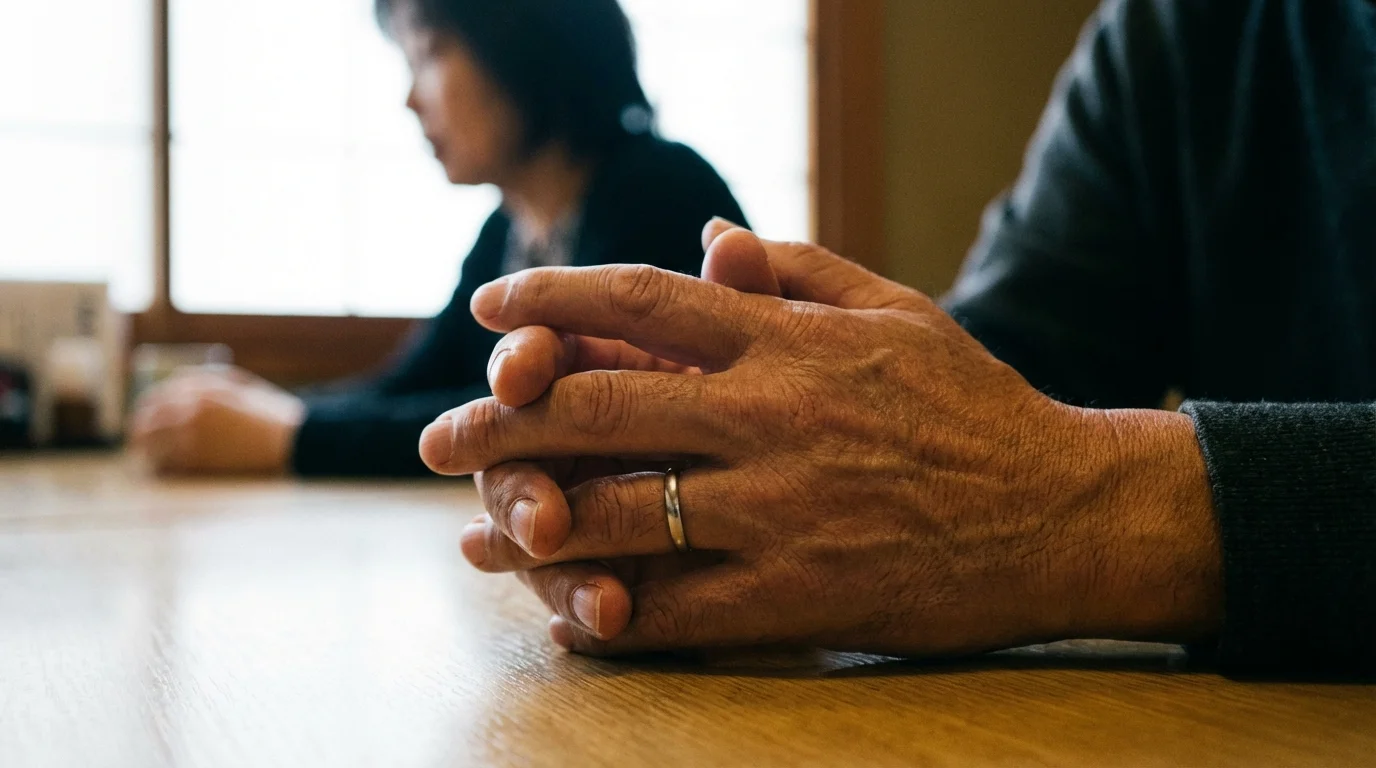
The second Sunday in May. Mother's Day. The world is abuzz with countless "thank yous." Flower shops have queues from morning, and restaurant reservations fill up a week in advance. Yet, there are some who lack the essential means – that is, a "husband" – to deliver that gratitude.
Manami-san's real husband left home three years ago. Their divorce is finalized, but they haven't told her mother-in-law. She's eighty-two and shows early symptoms of dementia. The fact that "her daughter's husband" is gone could shake her world to its very foundations. So, every May, I pass through the doorway of that house, a carnation in hand.
Not just a 'husband' for Mother's Day
Manami-san's request was initially just for Mother's Day: hand her mother-in-law flowers, eat a meal together, and say, "Mother, thank you for everything." That was all. The entire visit would last about three hours.
But the following year, the requests grew. Respect for the Aged Day. New Year's. Her mother-in-law's birthday. Four times a year, I began going to that house as Manami-san's "husband."

My mother-in-law loves to cook, and each time, she prepares something homemade for us: chikuzen-ni, nukazuke, osekihan. When I say, "It's delicious," she smiles, pleased, saying, "You always say that, don't you?" Seeing that smile, a tightness forms deep in my chest. The taste of the food I praise is genuine. My mother-in-law's feelings are genuine too. But I, who she calls "dear," am not her real son-in-law.
The boundary between the genuine and the fabricated flickers gently, like the steam rising from the chikuzen-ni. I've been living in this wavering state for years now.
The Act of Choosing the Carnation's Color
Preparing for Mother's Day requires more meticulous thought than one might imagine. Even the color of the flower cannot be wrong.
Red, pink, white, yellow. Each color of carnation has its own floral meaning. White is the color traditionally given to a deceased mother. What would it mean if I brought white flowers to my mother-in-law? It might seem like a trivial detail, but the work of a rental husband is built upon the accumulation of such trivialities.
In our preliminary discussions, I ask Manami-san: "What color was it last year?" "What's your mother-in-law's favorite color?" "Which would she prefer, a potted plant or a bouquet?" Things a real husband would know instinctively from years of experience, I have to verbalize and confirm, one by one.
One year, Manami-san murmured, "My ex-husband never once gave flowers to my mother-in-law. That's why, Mother, ever since you started coming, she's been really looking forward to Mother's Day."
My feelings were complicated. The rental husband was bringing more joy to the mother-in-law than the real husband ever did. It was someone's failure, and at the same time, someone's salvation. I try not to become overly invested in either feeling. My focus is simply on the person in front of me, and their smile.
Whose Gratitude Is It?
Mother's Day is said to be a day to "deliver gratitude." Yet, what I feel through this work is that gratitude is not a one-way street.
My mother-in-law thanks me, saying, "Thank you for always supporting Manami." Manami-san thanks me, saying, "Thank you for giving my mother-in-law peace of mind." So, then, who do I thank?
To be honest, I am grateful to my mother-in-law.
While eating the chikuzen-ni she prepares, I learn what it means to "be cherished." My own mother is still alive and well, yet opportunities to express my gratitude to her face-to-face are surprisingly rare. By participating in another family's "Mother's Day," I reaffirm the presence of my own gratitude each year.
Genuine emotions are born from fabricated relationships. Is that a contradiction? I don't believe so. If the emotion is genuine, then it is genuine.
Those Who Request a Husband for Mother's Day
Cases like Manami-san's are not uncommon. Requests for a "husband" or "wife" increase around Mother's Day, Father's Day, and Respect for the Aged Day. The reasons vary.
Divorced but can't tell their parents. Widowed but haven't truly come to terms with it and haven't informed those around them. Claiming to be on a solo work assignment, but actually separated. Fled due to domestic violence, but wish to maintain an amicable relationship with their former partner's parents.
What all these cases have in common is the motivation of "not wanting to hurt anyone." Carrying the guilt of lying, they still wish to protect the smile of someone important to them. I refuse to dismiss the earnestness of that wish.
Family Romance receives a variety of requests throughout the year: apology proxies, substitute attendance at weddings, friend proxies, elder care. But requests related to seasonal events carry a special weight. That's because the calendar demands a "shape of happiness" from people. For Mother's Day, it's the shape of "the whole family expressing gratitude." Those who don't fit that mold are confronted with their own lack.
My job is to temporarily fill that void. And ideally, once it's filled, to create a foundation for the client to take their next step. I don't want them to become dependent on me. I want them to use me to build genuine human relationships. That's what I always hope for.
The Day Her Mother Held My Hand
I still vividly remember last year's Mother's Day.
After dinner, while Manami-san was doing the dishes in the kitchen, I found myself alone with my mother-in-law. A Mother's Day special was playing on TV. Suddenly, my mother-in-law gently squeezed my hand.
"It was good to have you here."
It was a faint voice. Her wrinkled hand was warm. "The feeling is mutual," I replied. No more words would come.
In that moment, was I acting? Honestly, I don't know. There are moments in this job when I can't tell if I'm acting even in my private life. My identity wavers. The contours of Yuichi Ishii as a person blur. Yet, the warmth of that hand undoubtedly reached mine.
Having served as a 'husband' to over six hundred women, and as a 'father' to over thirty-five children in twenty-three families, I am still moved by the warmth of one grandmother's hand. I don't feel ashamed of that. As long as I can still be moved, I believe I'm still alright.
What Lingers After the Carnations Fade
May will come again this year. Manami-san contacted me, saying, "Please come again this year." Her mother will turn eighty-five. Her dementia is slowly progressing, but she still remembers my face. She greets me at the entrance with, "Oh, welcome."
Flowers eventually wither. The carnations I deliver will likely wilt within a week. But the memory of 'you came' will linger a little longer. I've heard that even as dementia progresses, emotional memories remain until the very end. That only those feelings—of happiness, warmth, and relief—remain even after words and names have faded.
Ideally, a service like this wouldn't be necessary. It would be best if families were complete, if a real husband bought the carnations and expressed genuine gratitude. But the world isn't that simple. There are people who carry missing pieces, yet still wish to bring a smile to someone's face. It is my job to answer that wish.
What color should I choose for the carnations this year? I should ask Manami-san. Most likely, it will be pink again. Because it's her mother's favorite color.
That warm hand is waiting for me again this year.
「感情が本物なら、それは本物だ」
— 石井裕一