* All client names have been changed to protect privacy.
Every Thursday at ten in the morning, I find myself standing before an apartment building in Suginami Ward. It's a two-story structure, over forty years old, and my destination is the corner room on the first floor. The nameplate bears 'Nakamura,' though it has been quite some time since anyone but Ms. Nakamura herself resided there. I press the intercom. After perhaps five seconds, the faint drag of slippers becomes audible. Each time I hear that sound, a small breath escapes me. Ah, she’s walking this week too. She's alive this week too.
The door creaks open. Eighty-seven-year-old Yoshi Nakamura, clad in her customary navy cardigan, utters the same familiar words.
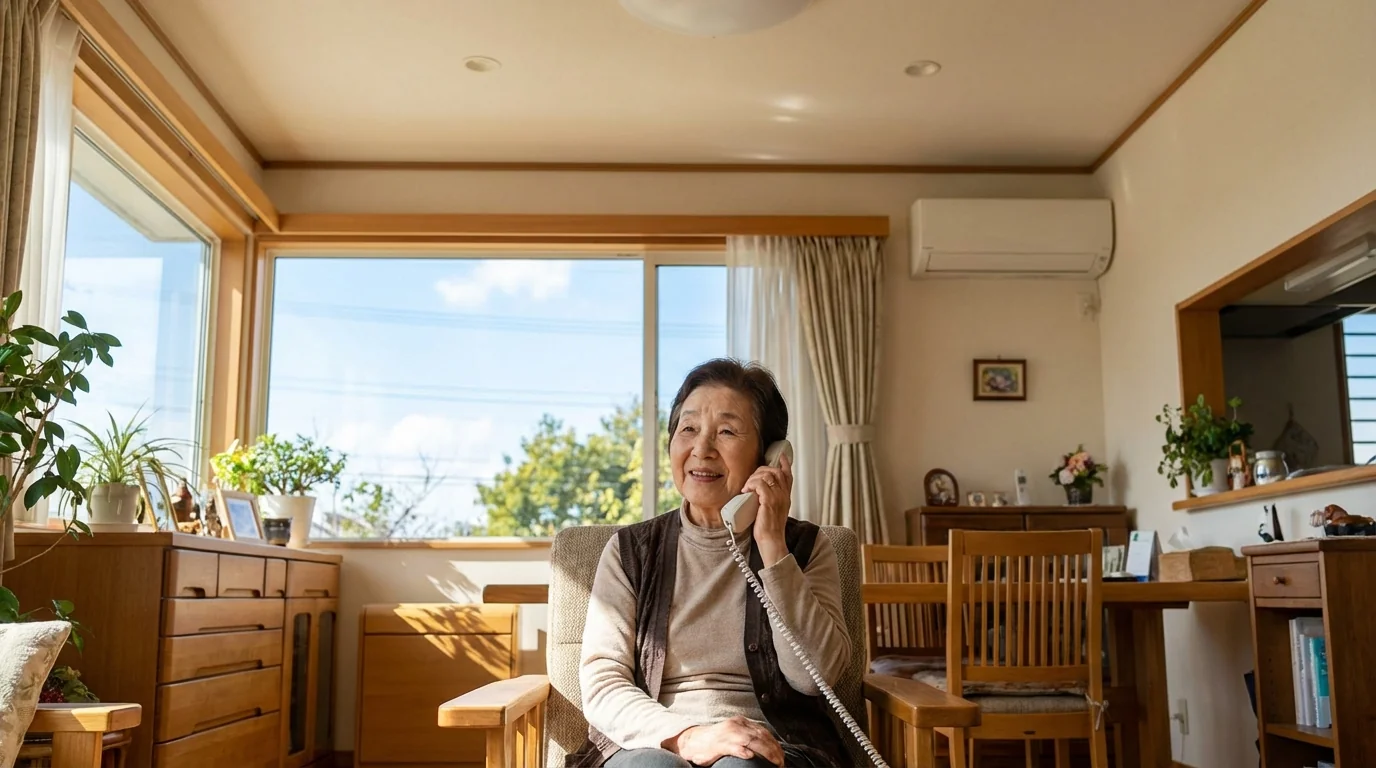
"Oh, Yu-chan. It must have been chilly, wasn't it?"
The cold February wind whispers through the corridor. I respond as I always do: "Not at all. It's rather warm today." In truth, my hands are stiff with cold. Yet, this simple exchange is our ritual.
The thirty minutes before the kettle goes on the stove
Upon entering her room, Yoshi-san’s first action is to fill the kettle with water. This is a crucial signal. Her ability to place the kettle on the stove indicates she can operate the gas hob. The appropriate water level suggests her judgment remains sound. I watch subtly, observing her kitchen: the daily notes pinned to the refrigerator, the garbage collection schedule, the medicine dispenser. I check for any changes from last week, for any new signs of trouble.
This, then, is the reality of our "elderly welfare check" service. We are not surveillance cameras. We visit once a week, at the request of Yoshi-san's son, posing as a "neighborhood acquaintance." Her son moved to Osaka for work three years ago. He comes to Tokyo once a month, but who watches over Yoshi-san the rest of the time? A care worker visits twice a week, but they are care professionals, not companions for casual conversation.
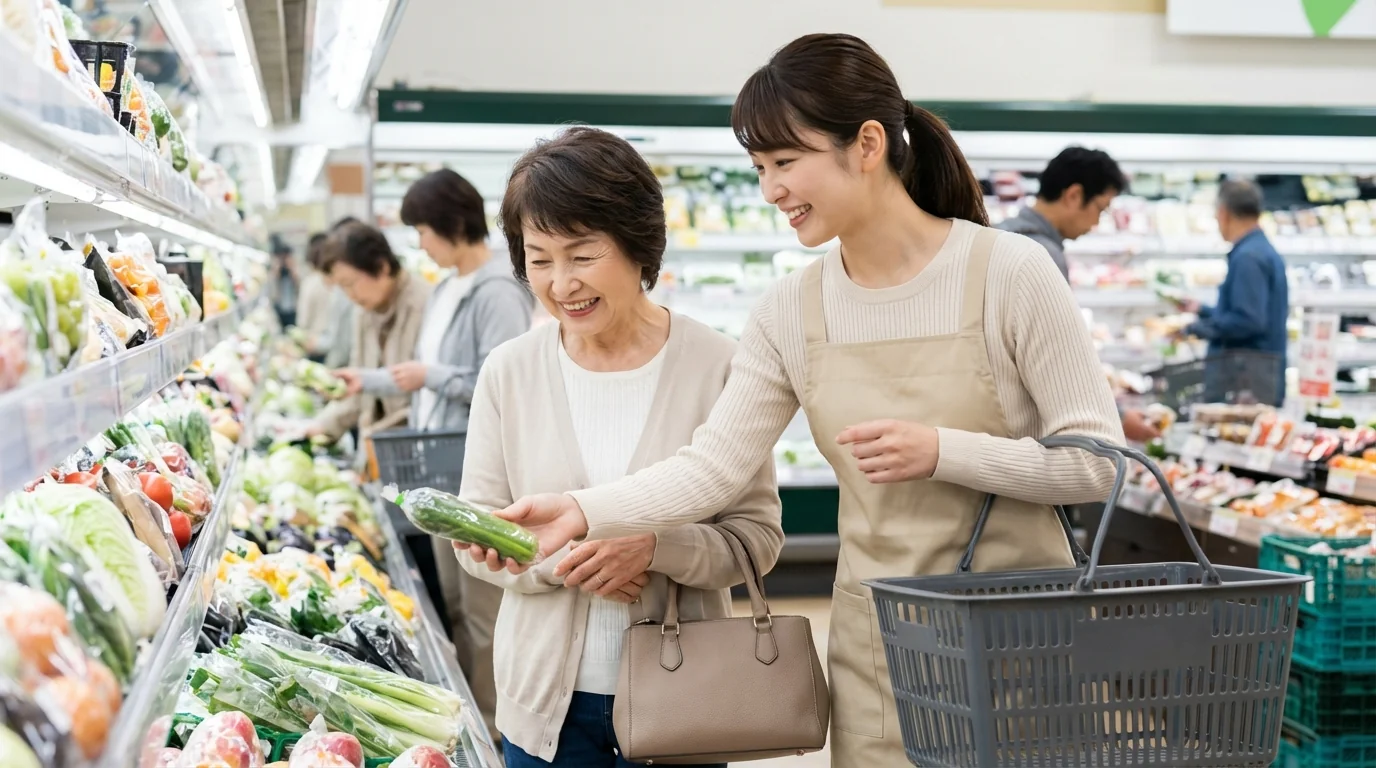
The tea is steeped. Yoshi-san invariably produces two rice crackers – one for me, one for herself. Were these crackers absent, it would be a signal that she hadn't managed to go shopping. But today, they are here. Hard, soy-flavored crackers. Yoshi-san has remarkably strong teeth and favors their crunch. "My dentist complimented them," she'll say with a delighted grin. I must have heard that story three times by now, but I respond, "That’s amazing!" as if for the very first time. I do it because I wish to see Yoshi-san's smile.
Who is "Yu-chan"?
Yoshi-san addresses me as 'Yu-chan.' The premise is that I am the son of a childhood friend who once lived nearby. That childhood friend—let’s call him Mr. Tanaka—was a real person who passed away several years ago. Whether Mr. Tanaka truly had a son, Yoshi-san’s memory is, to be frank, rather vague. Yet, the name 'Yu-chan' carries a warmth and familiarity for her, and I receive it.
The most difficult aspect of these elderly welfare calls is maintaining this 'premise.' Yoshi-san isn't suffering from dementia, but the edges of her memories sometimes blur. She might forget what we spoke of last week, or she might recall an event from fifty years ago as if it transpired yesterday. I must follow along naturally with either narrative. If she remarks, 'Yu-chan, you were still carrying your school bag back then, weren't you?', I’ll just offer a gentle smile and say, 'Was I indeed?' I don't deny, nor do I correct. In Yoshi-san's world, 'Yu-chan' undeniably exists. I possess no right to shatter that reality.
And yet, sometimes I ponder. What exactly am I to Yoshi-san? I am not the true 'Yu-chan.' Still, I come every week. We drink tea. We eat crackers. We chat about television. We talk about the weather. Within this steady rhythm, something profound is building. It feels too weighty to be mere acting, yet too fleeting to be family. It is a relationship without a name.
What is visible from the window in February
Yoshi-san's room in February is always cold. She has an air conditioner, but worries about the electricity bill, so she rarely uses it. Her kotatsu and kerosene heater are the primary sources of warmth. When I arrive, she'll turn up the heater slightly, remarking, "Because Yu-chan gets cold easily." Though, in truth, it must be Yoshi-san who feels the cold more acutely.
Beyond her window, a small plum tree stands. Though rooted in the neighbor's garden, its branches stretch towards Yoshi-san's window, and each February, its buds begin to swell. Yoshi-san cherishes this sight. She offers me updates on the plum blossoms' progress: "They're late this year, aren't they?" or "Oh, three have bloomed already!"
One Thursday, Yoshi-san remarked, "Yu-chan, when these plum blossoms bloom, you know, I think to myself, 'Ah, I made it through another year.'" Her tone was casual, yet my hand, holding the teacup, trembled ever so slightly. It wasn't merely 'I lived,' but 'I lived, *didn't I*?' as if confirming it to herself. As if gently reassuring her own heart.
For the elderly living alone, the turn of the seasons can be cruel. There is no one with whom to watch the plum blossoms unfurl. No one to exchange the simple words, 'Isn't it beautiful?' And so, I said, "You're right, three have bloomed already. They truly are beautiful." Yoshi-san smiled, responding, "Aren't they?" Can you possibly imagine a life where only one person a week will ever say "It's beautiful, isn't it?" to you?
Loneliness quietly breaks a person
It's said that roughly seven million elderly individuals live alone in Japan. Many of them, much like Yoshi-san, are 'healthy but lonely' souls. Their bodies still move with purpose, their minds remain lucid. Yet, they have no one to converse with. No one to whom they can simply say, 'It's cold today, isn't it?' There are days when their voices remain silent, save for a 'thank you' at the supermarket checkout.
Most requests for elderly welfare checks received by us at Family Romance come not from the elderly individuals themselves, but from their families. Sons and daughters, living far away, reach out, their voices laced with concern for their parents. "I call them, but they've seemed so subdued lately," they'll say. "They refuse to go to day care." "There's no one nearby they know." These are desperate, heartfelt pleas.
Yoshi-san's son—let’s call him Kenichi Nakamura—wept during our initial consultation. A sturdy man in his forties, he cried, saying, "I can't forgive myself for leaving my mother alone." But he has his work. He has his own family. He cannot leave Osaka. He tried to persuade Yoshi-san to move to Tokyo, but she simply stated, "I wish to die in this room." Kenichi-san has been perpetually caught between honoring his mother's wishes and condemning her to solitude.
I often reflect that this isn't merely an individual problem. It's a societal issue where the very structure of families has shifted, community bonds have frayed, and longevity itself has become synonymous with 'enduring a long time in solitude.' Our service, I believe, does no more than bridge that chasm.
What will I leave behind?
Each visit, I depart Yoshi-san’s home just before noon. Roughly two hours. Such a brief span of time. As I make my leave, Yoshi-san invariably comes to the entrance, calling out to my retreating back, "See you next week, Yu-chan." I turn, responding, "Yes, see you next week." The door closes, and the sound of her slippers slowly recedes.
In that moment, I always find myself pausing. For those two hours, Yoshi-san had been smiling. But what about the six days that follow? How will she spend the one hundred and sixty-six hours until next Thursday? Will she count the plum blossoms all by herself? Will she murmur 'It's cold, isn't it?' to the silent television?
To be honest, in this line of work, I sometimes grapple with a profound sense of my own powerlessness. What truly changes by merely visiting once a week? Does sharing crackers and tea make loneliness vanish? No. It couldn't possibly. Yet, as long as Yoshi-san bids me, "Come again next week," I will come. Even if my presence is but a single drop of water in an endless ocean, Yoshi-san is waiting for that very drop.
Once a month, I send Kenichi-san a report: his mother's state, any shifts in her health, anything I found concerning. Yet, there are things that simply cannot be captured in a report. The way Yoshi-san's profile looks as she gazes at the plum blossoms, the faint, deliberate pressure she uses to break a cracker, the warmth in her voice when she murmured, 'I made it through another year.' These moments remain, solely within me.
With every passing Thursday
Last Thursday, Yoshi-san, uncharacteristically, turned to me and asked, "Yu-chan, why do you bother coming to see an old woman like me?" I was taken by surprise. Yoshi-san usually doesn’t question the reason for my visits. Our relationship rests upon vague premises like "because I'm a neighbor" or "because I'm worried about you."
I paused for a moment, then replied, "Because your tea is so delicious, Yoshi-san." Yoshi-san laughed, "You're just saying that!" Yet, she looked pleased. Seeing that smile, I realized: the reason truly doesn't matter. To come. Simply to come. Sometimes, that alone is enough to sustain a person.
In truth, it would be far better if a service like this didn't need to exist. A society where families live nearby, where friends are present, where neighbors genuinely care. In such a world, I would be unnecessary. But that is not our reality. And so, every Thursday, I go to listen for the sound of the kettle coming to a boil.
The plum blossoms in February are still only half-bloomed. By next Thursday, they will probably have opened a little more. Yohi-san will surely say, "Yu-chan, look. They've reached seven." I will say, "Indeed." We'll stand side by side by the window, counting the plum blossoms together. That's all it is. And perhaps, it's just such simple things that are missing from this world.
「一人でいることと、孤独であることは違う。でも、誰かがそばにいるだけで救われることがある」
— 石井裕一