* All client names have been changed to protect privacy.
In early September, on an afternoon when the lingering summer heat still clung to the skin, my smartphone rang. The screen displayed an unregistered number. When I answered, a woman's voice came through. Perhaps in her fifties, her voice trembled ever so slightly.
"Um... you can rent out people, can't you?"

Calls like this aren't uncommon. But her next words made my hand still.
"I want to speak with my son. But when he sees my face, he just yells at me. So, I need someone to come between us. ...Even someone who would apologize in my stead would be fine."
To ask someone to apologize in her stead. The voice that uttered these words held a stillness bordering on resignation. I rechecked all my appointments for that day, and the following week, I went to meet her—let's call her 'Saeki-san' for now.
The story I heard in Saeki-san's kitchen
Saeki-san's apartment was nestled along a private railway line within the city. A building of over thirty years, her room was meticulously kept. There were no men's shoes by the entrance.
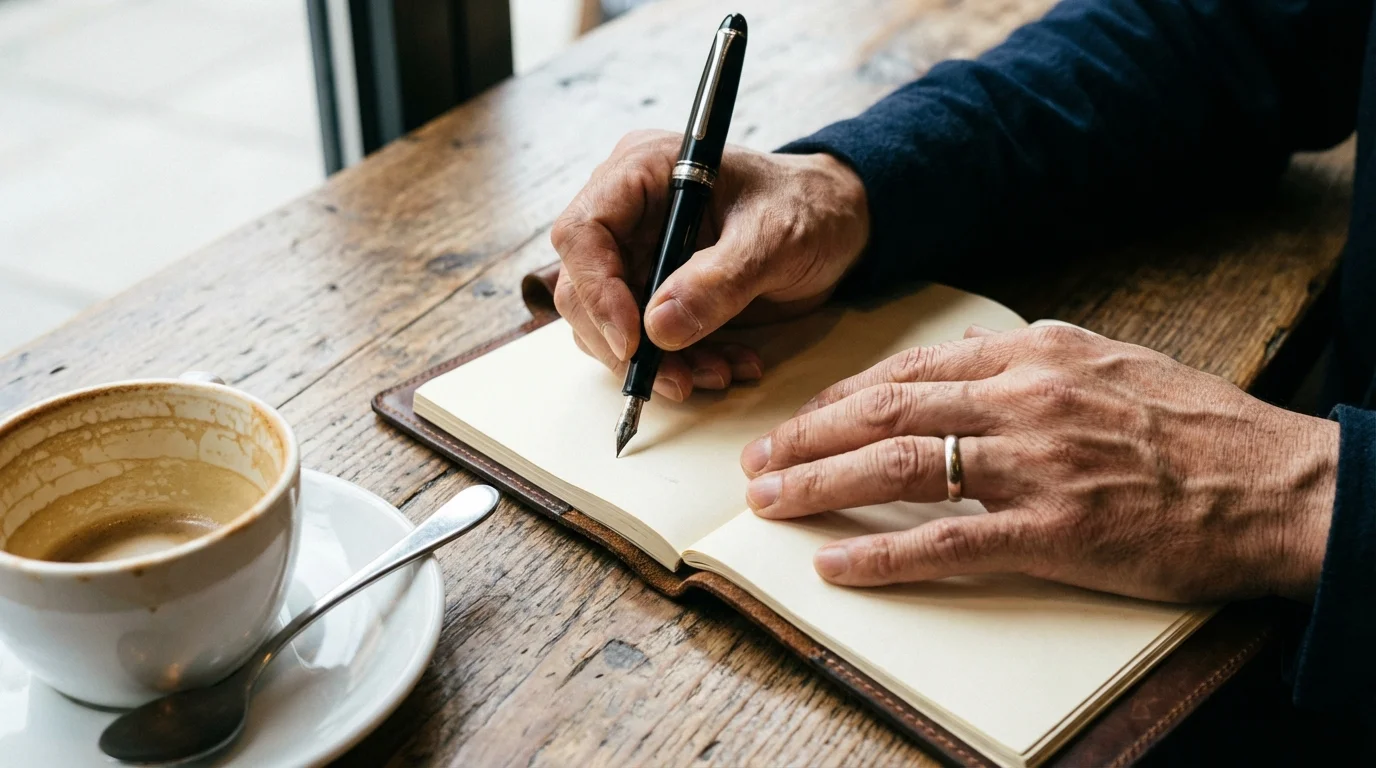
As she served me tea in the kitchen, Saeki-san began to recount her story. Her son, Takuya (a pseudonym), was thirty-two. They had lost touch several years prior. The rift had begun when Saeki-san opposed Takuya's marriage. Concerned about the woman's profession and family background, she admitted to having interfered too much. Takuya, enraged, left the family home. He was said to have married later, but no word ever reached her.
"He was right. I was wrong. But I no longer have the opportunity to tell him that."
Saeki-san shed no tears. Yet, the knuckles of her fingers, clenching the teacup, had turned stark white.
I asked, "When I meet your son, what exactly is it you wish for me to do?" Saeki-san pondered for a brief moment, then replied, "I simply want you to convey that his mother is full of regret. Even if he shouts at you."
This was not an apology by proxy. Nor was it conflict resolution. It was, rather, about placing oneself between family members. That was the profound sense I gleaned in that moment.
What does it mean to stand between?
At Family Romance, we receive a myriad of requests: friend proxies, stand-ins for wedding attendance, companionship for the elderly. Yet, among all these, the tasks involving disputes between family members demand an especially delicate touch.
Parent-child estrangements. Inheritance disputes between siblings. Requests to be present during post-divorce visitations. Each of these presents a scenario where, if the parties were to confront each other directly, emotions would invariably erupt.
I believe our purpose in stepping between them is to serve as a 'buffer.' The mere presence of another person allows individuals to regain a measure of composure. Even when the urge to shout arises, the tone of voice instinctively lowers a notch before a stranger. And that single notch can sometimes become the very thread that weaves the beginning of a dialogue.
However, we are neither lawyers nor mediators. We absolutely do not make legal judgments. All that is within our power is to convey the sentiments of one person to another. Merely that. Yet, 'merely that' is a task of profound difficulty. A single misplaced word can forge an irreparable chasm. For this very reason, I pondered for three full days before accepting Saeki-san's request.
Thirty minutes waited in the autumn wind
My approach to Takuya-san was undertaken with utmost caution. First, I drafted a letter. It introduced my name and the company, Family Romance. It stated that I had received a request from his mother, and expressed my wish to meet him. Within the letter, I inscribed Saeki-san's own words, exactly as she had spoken them: "He was right. I was wrong."
For two long weeks, no reply arrived. To Saeki-san, I simply conveyed, "Let us wait."
Then, at the close of September, a call came from Takuya-san. It was a brief exchange. "Only thirty minutes," he offered. The designated meeting place was a family restaurant in the suburbs.
I arrived fifteen minutes before our appointed time. Outside the window, the ginkgo leaves had just begun to whisper hints of autumn's colors. Takuya-san arrived precisely on the hour. He was a young man of sturdy build, yet his eyes held a subtle resemblance to Saeki-san's.
Without preamble, he spoke: "You were sent by my mother, weren't you? And you're getting paid for this?"
"Yes," I answered. "I am, indeed, receiving payment."
To never lie. This is one of the unwavering principles I adhere to in my work. If questioned, I answer truthfully. For if one were to conceal the transactional nature of the relationship, the trust that might form would inevitably shatter later.
Takuya-san's face registered a flicker of surprise. He had likely anticipated an excuse or a defensive explanation. I continued, my voice calm, "However, your mother's feelings are truly genuine. And this, too, is the honest truth."
Can emotions be a lie?
At this juncture, I feel compelled to share a thought that has long occupied my mind.
Our work is, in essence, 'proxy.' To do something in someone else's stead. We act as proxies for apologies, for attendance, for even a father's presence. But can emotions, I wonder, truly be proxied?
The regret Saeki-san wanted to convey to Takuya-san. When I spoke those words, did they carry Saeki-san's emotions? Or, filtered through me, a stranger, did they transform into something else entirely?
To be honest, I don't know.
However, what I've come to feel after working with over five thousand staff members across various assignments is that whether something truly connects isn't determined by the accuracy of the words, but by the 'ma' – the subtle, unspoken resonance. In front of Takuya-san, I didn't try to convey Saeki-san's words with verbatim accuracy. Instead, recalling the atmosphere I felt in Saeki-san's kitchen, the whiteness of her fingers gripping the teacup, the tremble in her voice, I spoke in my own words.
If an emotion is genuine, then it is genuine. I believe that. So, even when acting as a proxy, what I felt in that moment was no lie. Touching Saeki-san's pain, the desire *I* felt to "convey it" was genuinely my own.
Why do families break, and why can't they be mended?
In Japan, there's a strong resistance to discussing family problems with outsiders. Phrases like 'family shame' or 'family matters are for family' encapsulate this. That sentiment, I feel, hasn't changed since I was a child.
But what about reality? The number of solitary deaths continues to rise. Parent-child estrangement, siblings cutting ties, parents unable to see their children after divorce. Many requests that come to me don't start with 'Help me,' but with the preface, 'It might already be too late, but...'
It might be too late. Yet, the desire to reach out is still there. I believe we are supporting that very last step.
Some people can't bring themselves to visit government consultation services. Others are afraid to talk to a counselor. Then there's that delicate space where things aren't severe enough to involve lawyers, yet it's impossible for those involved to resolve it themselves. It's in this space that people like us are needed. In truth, it would be better if services like ours didn't exist. If families could talk directly, that would surely be ideal. But as long as there are people who need it, I will continue.
What was my identity, as I sat there?
The thirty minutes with Takuya-san eventually turned into an hour and a half.
His initially rigid expression gradually softened. When I spoke of Saeki-san, he remained silent; he didn't yell. He had a refill of coffee partway through. At that moment, he said in a small voice, "...Is *that person* well?" "That person." He didn't say "mother" or "okaasan." But those two words were packed with years of emotion.
I replied, "Yes, she's well. But she might have lost a little weight."
It wasn't a lie. Saeki-san's wrists were thin.
As I was leaving, Takuya-san simply said, "I'll think about it." I had no right to press him further. I was an intermediary, not family. But in that family restaurant booth, who was I, sitting there? Saeki-san's proxy? An unknown stranger to Takuya-san? Or an unnamed relationship that temporarily existed between the two of them?
I myself have served as a "father" to over thirty-five children in twenty-three families, and played the "husband" to over six hundred women. But Saeki-san's request was not a role to play. I didn't take on someone's part. I simply sat between the two of them as Yuichi Ishii. That, paradoxically, was the most difficult part. Because without a role, there's nothing to shield myself with.
What Autumn's visitor left behind.
Several weeks passed since then. Saeki-san contacted me. She said a short email had arrived from Takuya-san: "I'll bring my wife next time." Just one line. Saeki-san cried on the phone. I said, "That's wonderful, isn't it?" No further words were needed.
I don't want them to depend on me. I want them to use me to build genuine human relationships. I always think that. My standing between Saeki-san and Takuya-san was only for a moment — just that hour and a half at the family restaurant. But that brief moment gently opened a door that had been closed for years.
Is a blood connection all it takes for a family to be 'real'? It's not that simple. Likewise, if an outsider intervenes, is it a false reconciliation? That, too, is not so simple.
The autumn wind has gradually grown colder. Ginkgo leaves are turning color and will soon fall. Seasons turn for everyone equally. But sometimes, family time can remain frozen for years.
If there are words you wish to convey to someone now. If there are words you cannot deliver yourself. I will stand between them again. Simply sitting there, in an unnamed role.
That is my work. And perhaps, it is something that cannot be fully contained by the word 'work.'
「人と人の間に立つとき、大切なのは正しさではなく、双方の痛みを理解することだ」
— 石井裕一